30-day roadmap
$500
A plan for the first month: what to fix, launch, test, or stop first, and the order to do it in.
It's hard to know what to fix first when design, SEO, AEO, and content all seem to need attention at once. This service coordinates that work into a phased plan, so each step builds on the one before it instead of competing for the same budget.
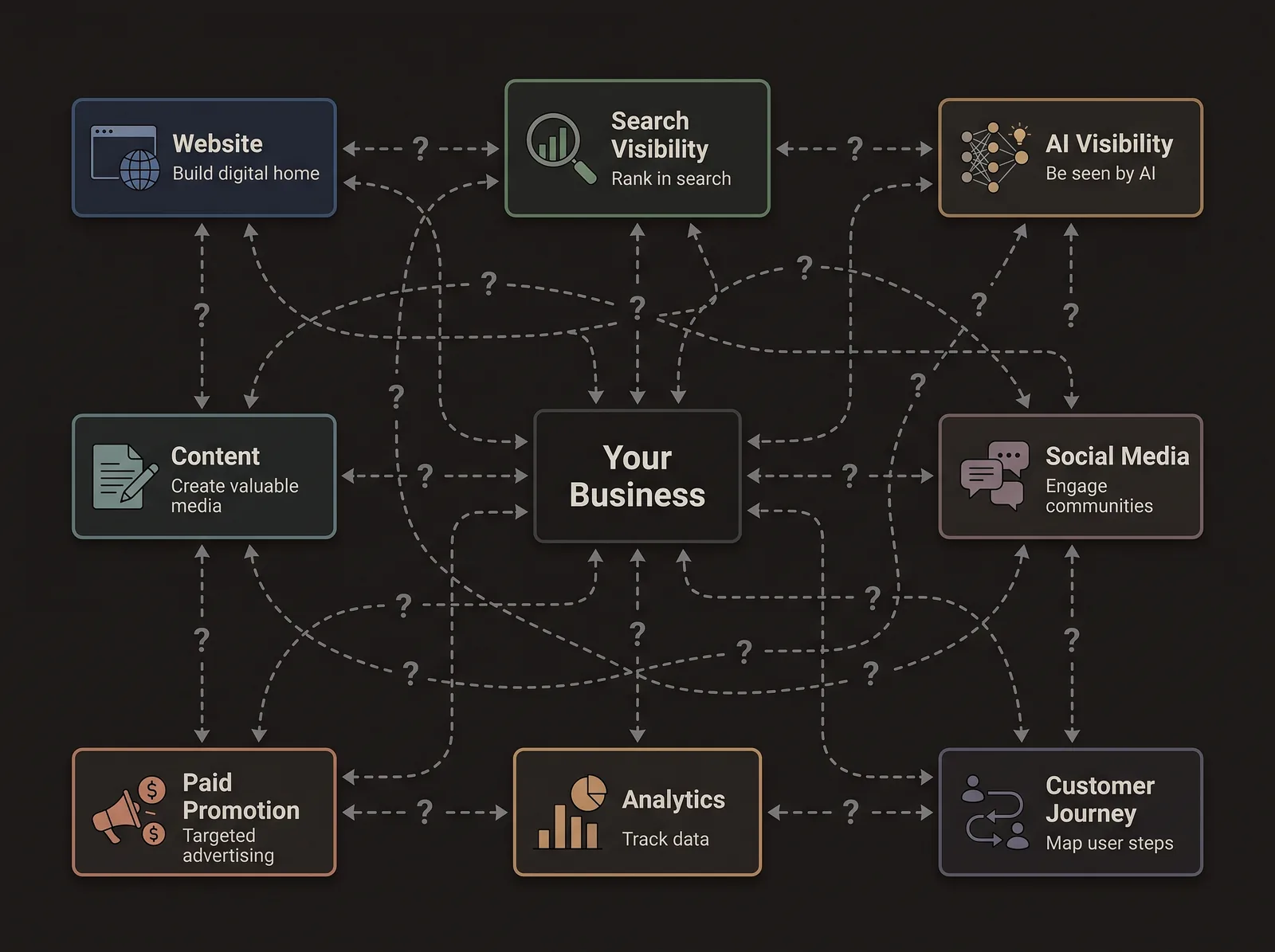
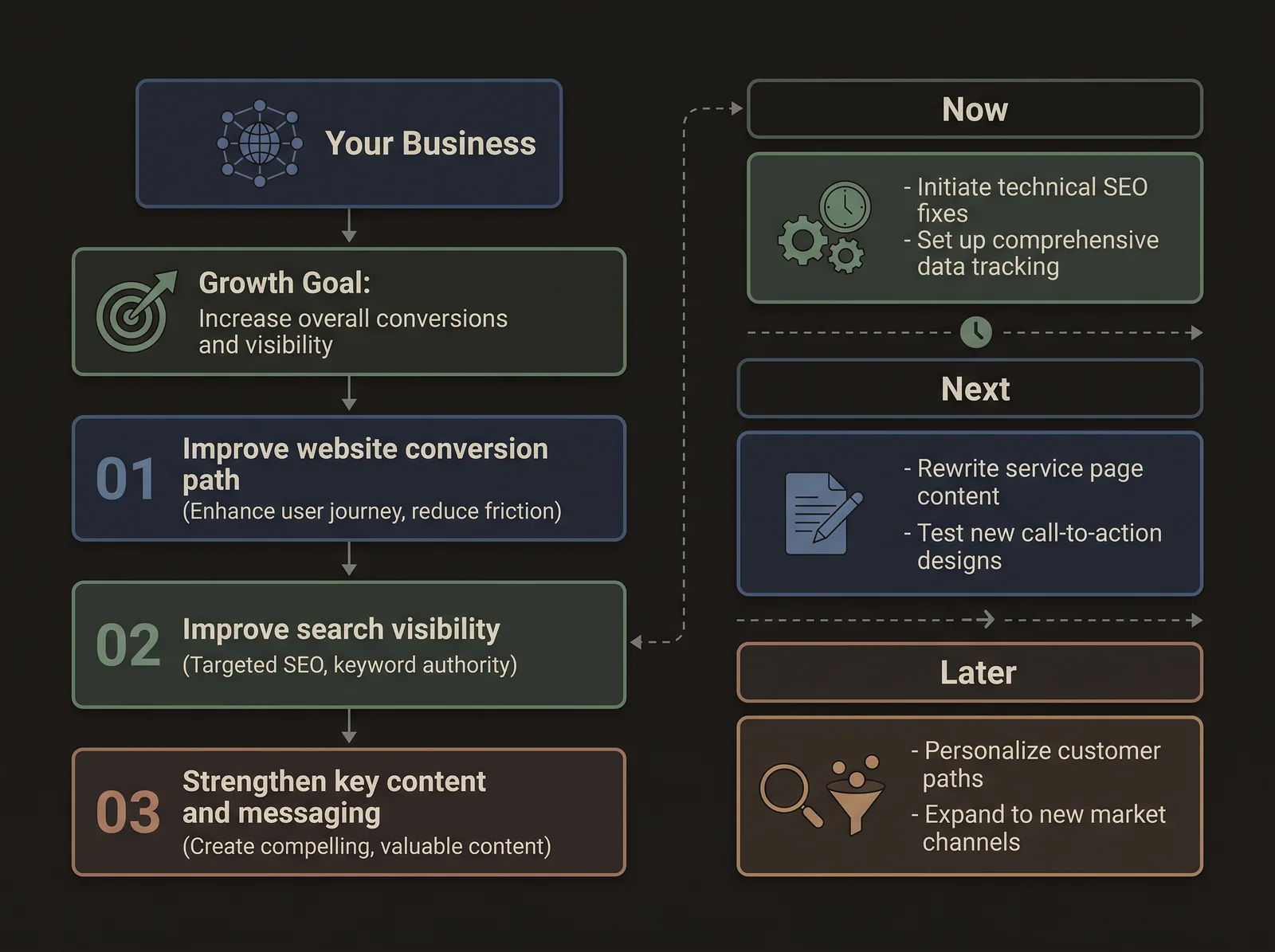
Illustrative example. Actual results vary by business, market, and competition.
Four points in a visitor's path, and what changes at each one.
They are searching
The business becomes findable for what people actually type.
They found the page
The first line answers whether this business is right for them.
They are deciding
Cost and what to expect are both stated plainly, so there is something concrete to go on.
They are ready
Getting in touch is direct and takes one step.
The work runs in order, because each phase depends on the one before it.
Days 0 to 30
Days 30 to 60
Days 60 to 90
The roadmap itself sequences and prioritizes the work; the work is carried out through the same design, SEO, AEO, and content services offered individually, scoped inside this plan instead of purchased and coordinated separately.
Example of what you receive
90 Day Growth Roadmap · [Business Name]
Goal and starting point
ExampleCreate a dedicated page for catering. Existing traffic lands on a general services page with no clear next step.
Each phase lists three to five actions, each with a reason and a measure of success.
The 30 and 60 day roadmaps use the same framework over a shorter period, so the difference between them is scope, not format.
These three prices cover the planning work only: the written roadmap and the review call. They do not include the design, SEO, AEO, or content work the roadmap identifies. That work is scoped and priced separately, the same as it would be bought on its own.
$500
A plan for the first month: what to fix, launch, test, or stop first, and the order to do it in.
$700
The 30-day plan extended into a second phase: what to improve, what gaps to close next, and where to focus after the first round.
$1,000
A full quarter mapped into three phases, each with its own priorities and a checkpoint to see what's working before moving to the next.
This is practical, not a strategy deck. The document arrives before the call, with a final version after if anything changes.
The roadmap price covers the plan itself: priorities, sequencing, and the review call. Design, SEO, AEO, and content work carried out under the plan is scoped and priced the same way it would be as a standalone service, not charged twice.
If you want Webuvo to carry out the design, SEO, AEO, or content work the roadmap identifies, that's a separate engagement, scoped and priced once it's clear which services are involved and for how long. It isn't required: you're free to use the roadmap on your own, hand it to someone else, or come back for individual services one at a time instead.